From Survival to Dreams: Aisha's In Her Hands Journey
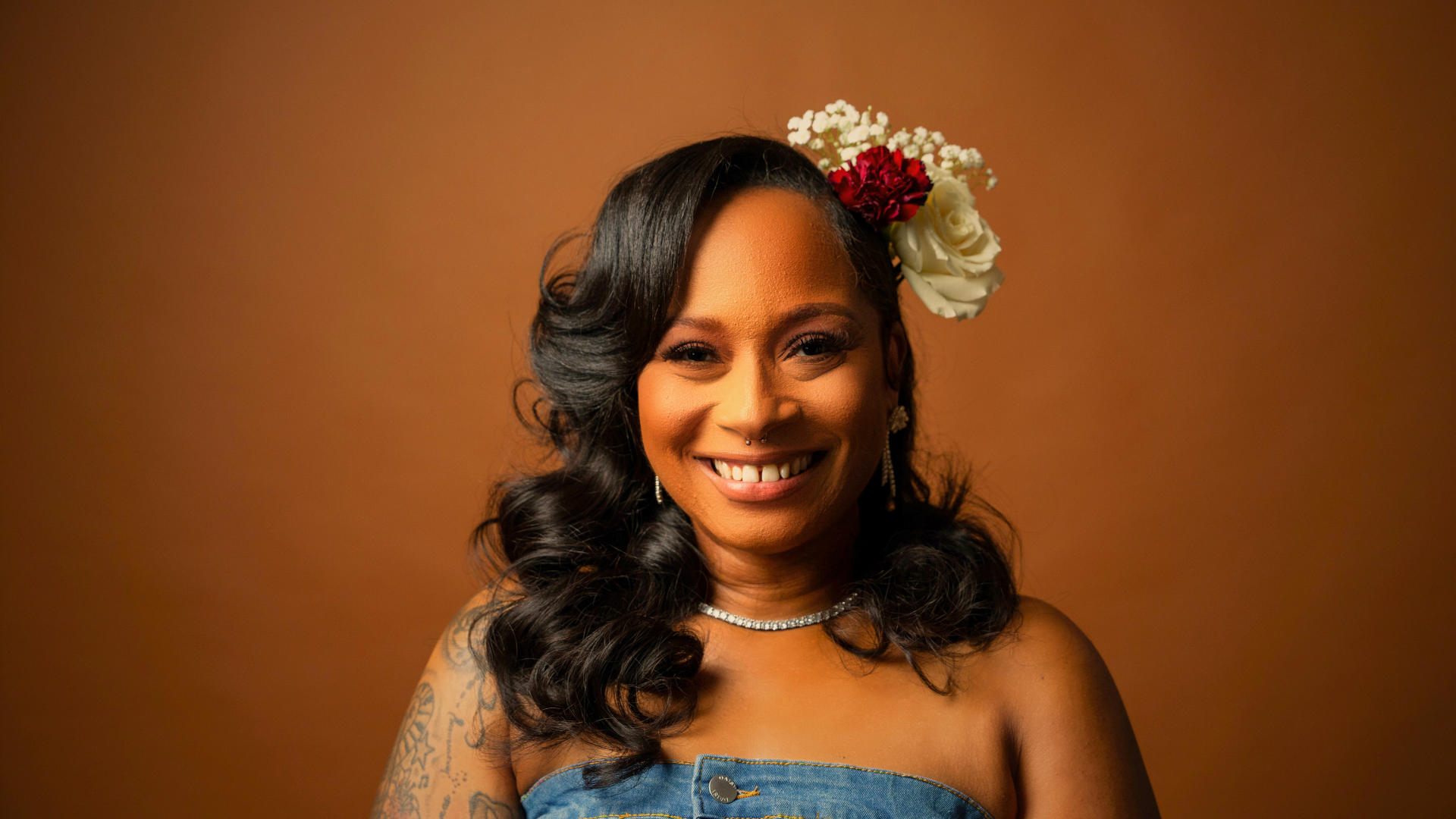
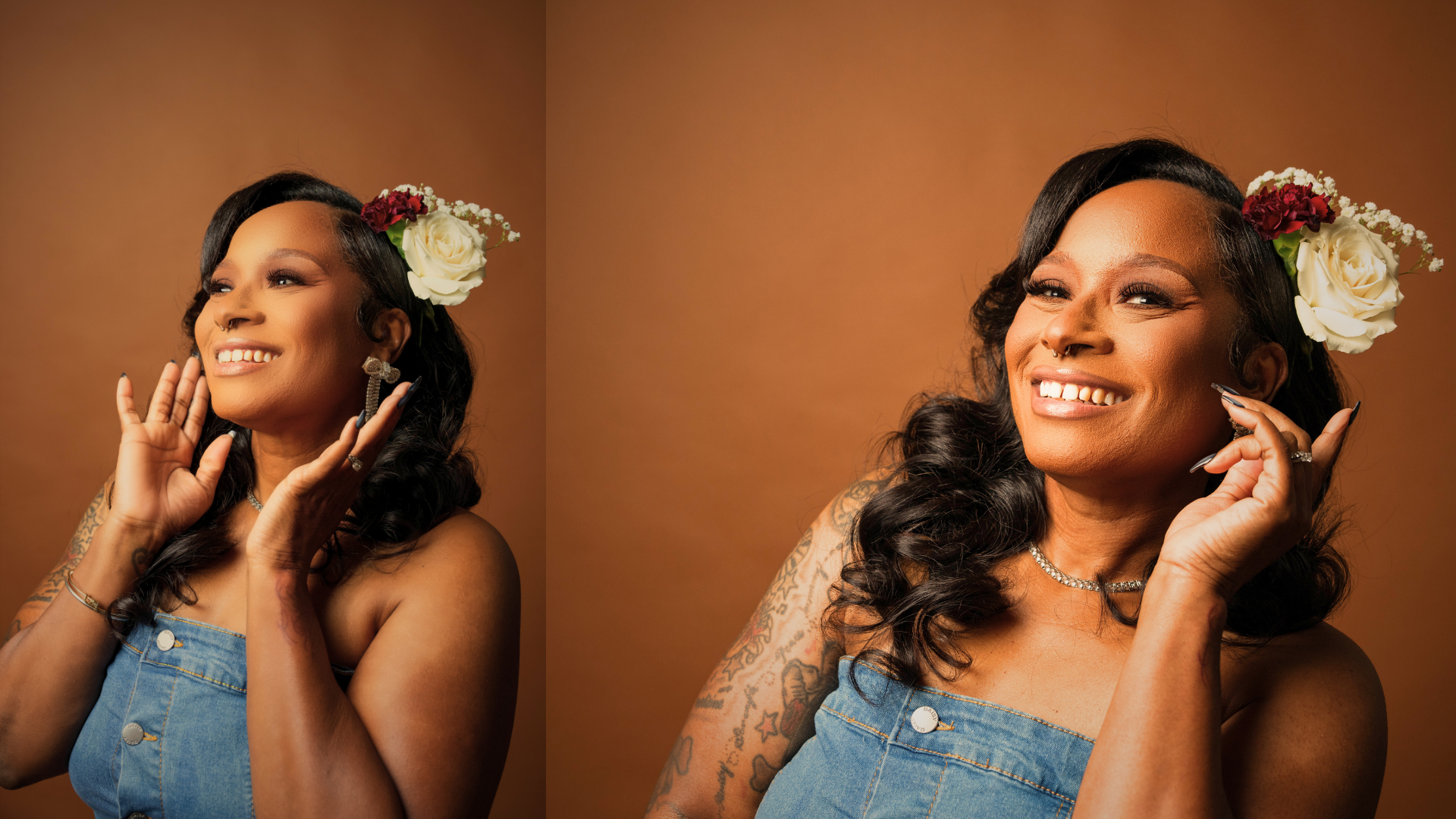
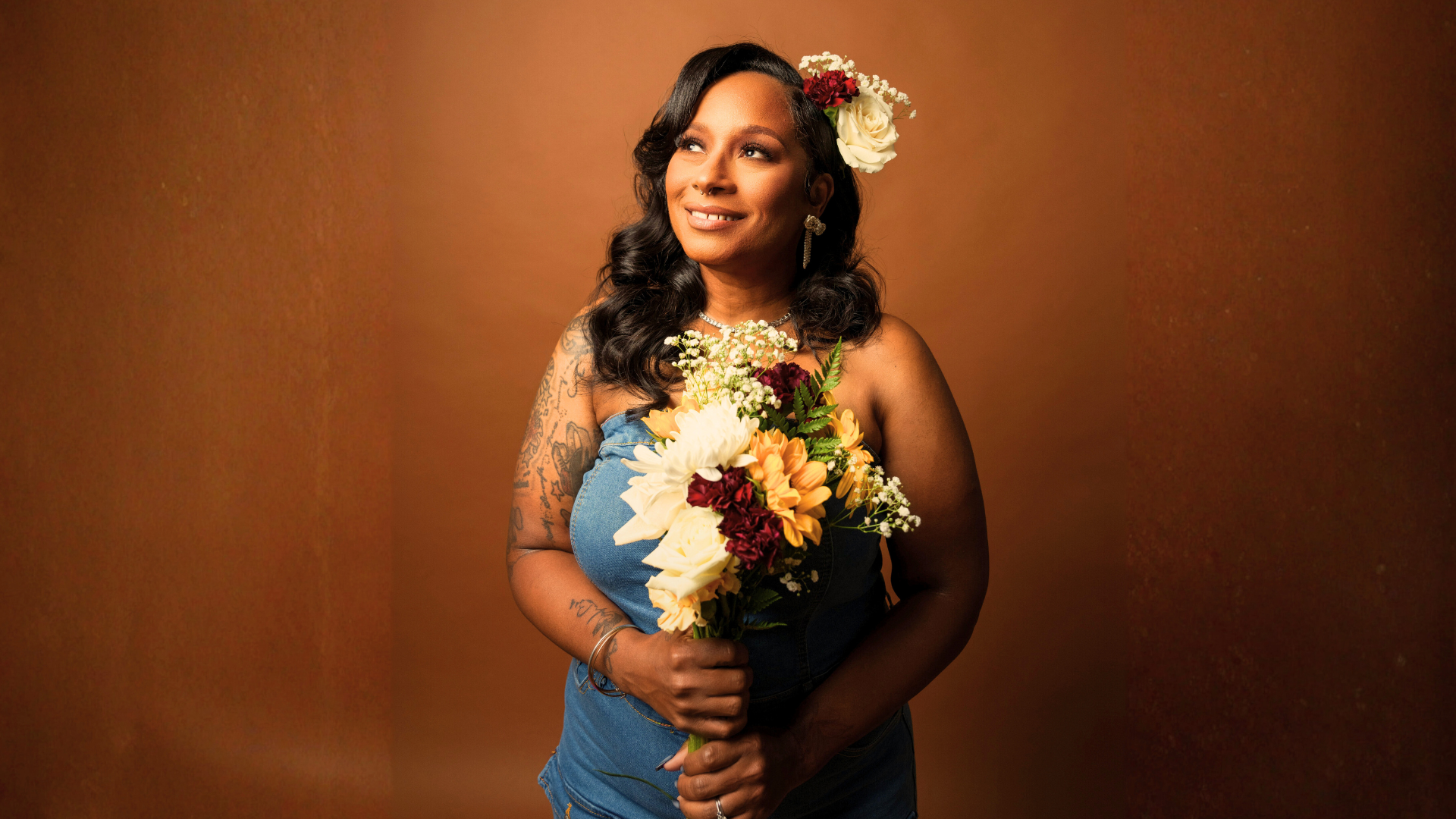
When Aisha Amos found the postcard on her door about the In Her Hands guaranteed income program, her first instinct wasn't to think about herself. After more than 20 years in Atlanta, the Baltimore native had become accustomed to looking out for others first. So, when she saw information about the Georgia Resilience and Opportunity Fund's program, she immediately called a friend. "Hey, you need to apply for this."
It was only after persistent encouragement from the same friend that Aisha finally submitted her own application.
"They'll never accept me," she thought, particularly because societal assumptions about married women suggested her life should be "grand."
But the reality was far different. Despite her husband's employment and her skills as a master cosmetologist, financial stability remained elusive.
Aisha is now a participant in In Her Hands, supported by a $6.2 million grant from the Arthur M. Blank Family Foundation. The foundation’s grant provides guaranteed income to women in Atlanta's English Avenue and Vine City neighborhoods over three years, addressing the income inequity and financial insecurity that disproportionately affect women.
The Entrepreneur's Struggle
Aisha's story highlights the precarious nature of entrepreneurship, particularly for women who balance multiple responsibilities. As a master cosmetologist who had operated her own salon suite, she understood the feast-or-famine cycle of business ownership.
In 2021, health issues forced her to close her salon and take a job at European Wax Center. The security of steady income brought relief—she was finally catching up on bills. But when the company restructured and eliminated positions at her location, that stability vanished.
The timing couldn't have been worse. Aisha had just reopened her suite but hadn't yet rebuilt her clientele to sustainable levels. "It just got to be a lot because the suite was demanding and I had to decide, do you rob Peter to pay Paul?" The constant juggling of bills became overwhelming, and she eventually closed the suite when her lease expired.
When Everything Falls Apart
The period before discovering In Her Hands was characterized by relentless hustle and mounting stress. Aisha was working multiple gigs and driving for Uber, scrambling to keep up. The breaking point came just two days into her new job at the wax studio when she was T-boned, and her car was totaled.
"I don't have money for a down payment. This job was supposed to be my get out," she remembers thinking. Her damaged credit made it nearly impossible to secure another vehicle. Only through her brother's willingness to co-sign was she able to get back on the road, adding family responsibility to her financial anxiety.
The stress extended beyond immediate bills. Her son had gone off to college in another state, and after his freshman year, the university announced that students would need to find off-campus housing. "Now I've got to pay for an apartment and electricity," she explains. Every step forward seemed to result in being pushed back.
As a Buddhist, Aisha found herself praying and chanting for change. "I was feeling worthless a little bit because I wasn't able to contribute my portion to our household as I had been."
Rebuilding with Dignity
Aisha's approach to receiving guaranteed income reflects both pragmatism and long-term thinking. Her first priority was stabilizing her car payment, as she did not want to jeopardize her brother's credit after his help. Once transportation was secure, she could address other bills and begin planning for the future.
The program's flexibility proved crucial. Unlike assistance programs with strict usage requirements, In Her Hands allows participants to make their own decisions about priorities.
"It's not like I get slapped on the hand allowed if I don't use it for this or that," Aisha notes, appreciating the trust and dignity inherent in the approach.
With financial pressure reduced, Aisha could finally pursue a long-delayed goal: returning to school to complete her bachelor's degree in film and entertainment. "I made a commitment to myself many years ago to go back to school," she explains. The guaranteed income provided not just tuition support but the mental space to focus on education rather than survival.
Finding Community
The psychological impact of financial stability extended beyond stress reduction.
"I don't have as much stress on me anymore financially," she reflects.
The ability to plan rather than merely react represented a fundamental shift in her daily experience.
Participation in the program's community advisory board of directors provided unexpected benefits beyond financial support. "It taught me I'm not the only one," Aisha explains, describing connections with other women whose stories mirrored her own. "Our stories are like, 'That's my story. What are you talking about? I felt the same way.'"
This sisterhood offers support that extends beyond program meetings. "We check in on each other," she says, valuing connections with people who understand struggles she might not discuss with family or longtime friends.
Challenging Assumptions
Aisha's experience directly challenges common criticisms of guaranteed income programs. Her response to skeptics draws on both personal experience and broader understanding of women's roles:
"Contrary to popular belief, when people get guaranteed income, they're going to do the right thing because they've already been without."
Her analysis goes deeper, addressing the particular circumstances of Black women. "Especially mothers, especially Black women, we're the backbone of the family. We don't have a choice. Husbands can come and go, family can come and go. We don't have a choice."
This perspective directly connects to Dr. Martin Luther King Jr.'s vision, which inspired the program. Aisha sees the approach as recognition of women's leadership capabilities:
"We've led movements. We're going to continue to do that. It's not going to stop. I think it's embedded in us."
Looking Forward
Looking toward graduation and career development in film and entertainment, Aisha envisions giving back to the program that supported her transformation. "I just want to be able to help. I want to be able to assist, I want to be able to give back." She even imagines documenting the program's impact through her developing film skills.
Her advice to other women considering applying reflects her transformation: "Just do it because it's not up to you. If you get it, you get it. If you don't, there's another day and there are resources still."
Aisha's journey illustrates how guaranteed income can function as more than financial assistance. By providing stability without stigma, the program enabled her to transition from a state of survival to pursuing long-deferred dreams. Her story demonstrates that when women receive support without judgment, they make thoughtful decisions that benefit not only themselves but their families and communities.
Through In Her Hands, Aisha moved from asking "What am I about to do?" to confidently pursuing her dreams while preparing to help other women access similar opportunities. Her transformation reflects the program's broader goal of addressing systemic inequities by trusting women to make the best decisions for their own lives.
The Georgia Resilience Opportunity Fund's (GRO Fund) In Her Hands program is a three-year guaranteed income initiative designed to directly address the income and wealth inequity that disproportionately impacts women, particularly women of color, in Georgia.
This project, supported by $6.2 million in funding from the Arthur M. Blank Family Foundation, provides women residing in Atlanta's historic English Avenue, Vine City, Washington Park, and Bankhead neighborhoods with $36,000 of no-strings-attached income support over three years.
The program had two core, policy-relevant objectives:
Investment in Financial Mobility: To fundamentally improve the financial stability of participants and their families/dependents by helping them shift beyond wealth decelerators (e.g., predatory debt, high-interest loans) and gain access to wealth accelerators (e.g., higher education, entrepreneurship, asset accumulation).
Generating Policy Evidence: To generate robust, real-world data and compelling narratives relevant to philanthropic and public policy conversations on the transformative effects of direct financial assistance on economic well-being, mental health, and structural equity.